Introductory Webinar of the ISLE Project on Innovative and Sustainable Learning Environments in Primary Schools

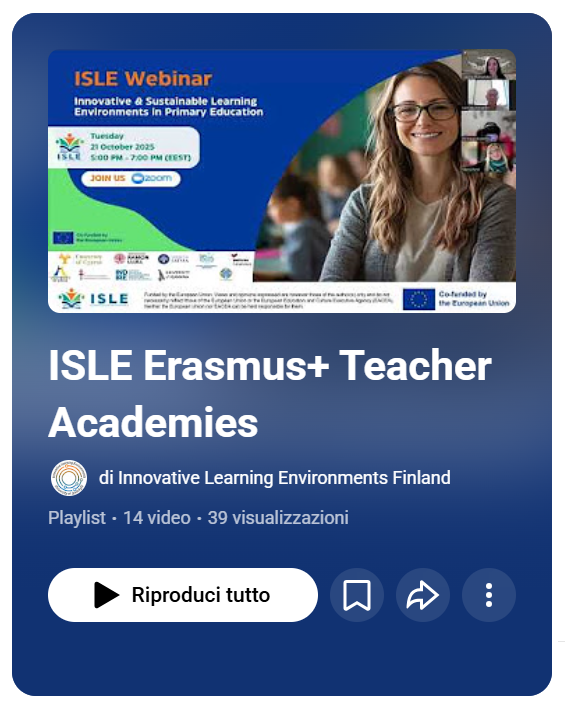
On Tuesday, 21 October, the Introductory Webinar of the ISLE project was held on the theme: Innovative and Sustainable Learning Environments in Primary Schools.

The webinar marked the official launch of the ISLE Project—Innovative and Sustainable Learning Environments in Primary Schools, presenting the project objectives, key concepts, and the international consortium. Additionally, the new ISLE International Network was announced—an international network that will connect schools, trainers, and stakeholders across Europe.

The ISLE Project, funded under the Erasmus+ Teacher Academies programme, aims to address the need for high‑quality and inclusive primary education in Europe by redesigning learning environments through innovation and sustainability. By creating a network of teacher education providers and stakeholders, ISLE fosters a collaborative community dedicated to jointly reflecting on and developing effective educational practices. Through research, professional development, and policy engagement, the project seeks to empower educators and contribute to reforms that support equitable, sustainable, and future‑ready learning systems.

Establishment of the ISLE International Network

Led by the University of Latvia, the ISLE consortium is launching an International Network of organisations and stakeholders involved in Initial Teacher Education (ITE) and Continuing Professional Development (CPD). This network will bring together teachers, school leaders, researchers, policymakers, non‑profit organisations, and educational communities committed to building inclusive, innovative, and sustainable learning environments in primary schools.

WP3 – Mapping Policies and Needs

ISLE project partners are conducting research on current policies and the needs of primary education systems across Europe. Through a combination of document analysis and field research, this work will ensure that the ISLE framework reflects the real needs of schools and educational systems.

The full recordings are now available on the ISLE YouTube playlist:

We invite colleagues in the education sector to watch the sessions and learn more about the project’s collaborative approach to promoting quality, equity, and innovation in primary education.

By Laura Coscia 


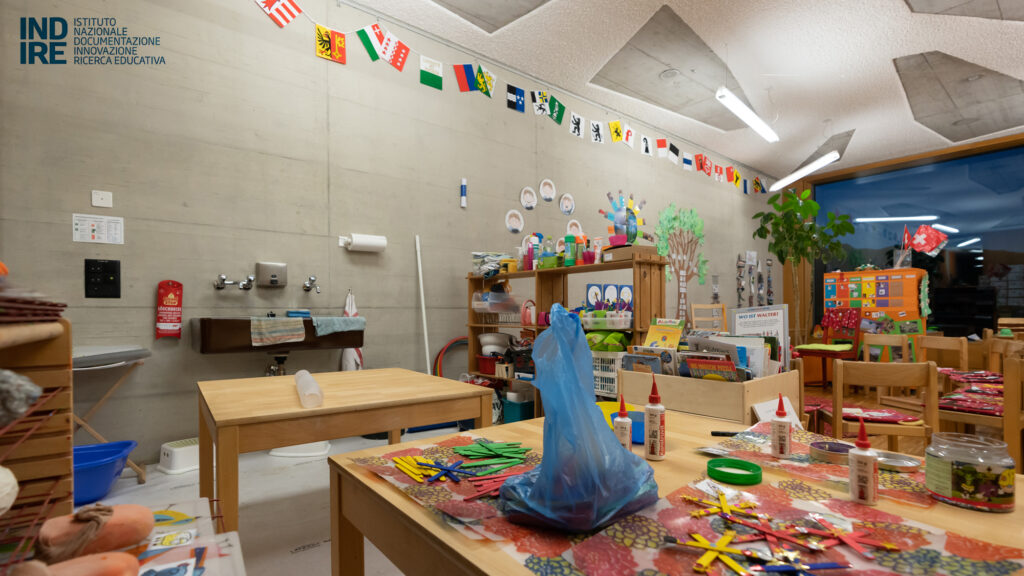
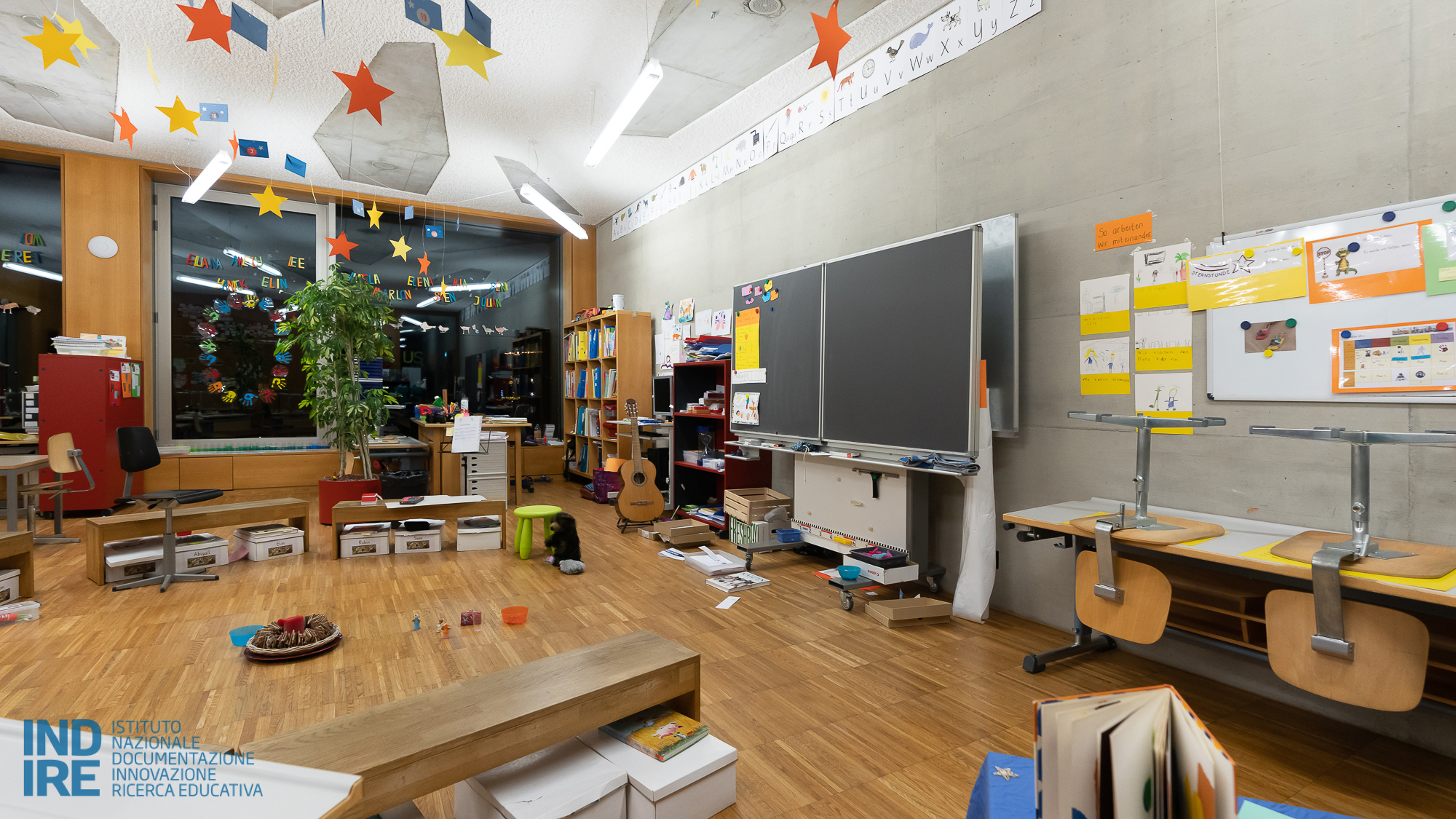
(Indire Photo Archive)

ISLE: Innovative and Sustainable Learning Environments

In continuity with the three‑year project “Constructing Education: building for impact” promoted by the Council of Europe Development Bank (CEB) and the European Investment Bank (EIB), the INDIRE research group on Learning Environments has decided to further develop some of the themes addressed within a partnership more strongly oriented toward international, research‑based collaboration.

The outcomes of the project highlighted the need to support the design and redesign processes of school spaces through appropriate measures aimed at assisting school communities during the transition and appropriation phases of innovative environments.

This need also emerges from various national and international studies. The OECD and PISA stress the urgency of rethinking school spaces to foster meaningful learning and active participation in the knowledge society (OECD, 2017, 2023). Recent CEB reports highlight the importance of improving teachers’ spatial competencies to maximize the impact of investments in educational infrastructure (French et al., 2019). Research funded by Erasmus+ Teacher Academies—which shows that the learning environment is a crucial yet often underestimated factor in educational effectiveness—represents an important opportunity for the INDIRE working group dedicated to studying innovative learning environments to deepen and advance their work.

Collaborative Learning Communities for Redesigning Primary Education Towards Innovative & Sustainable Learning Environments (ISLE)

In this context, the INDIRE research group on Learning Environments has joined as a Partner in the project “Collaborative Learning Communities for Redesigning Primary Education Towards Innovative & Sustainable Learning Environments (ISLE)”, funded under the Erasmus+ Teacher Academies programme.

The project was officially launched with an inaugural meeting held at the University of Cyprus in Nicosia on 15–16 May 2025. European partners participated in the event to establish the foundations for common objectives and for future work aimed at improving primary education systems.

The project stands out for its holistic and multidimensional approach aimed at modelling innovative and sustainable learning environments (ISLE), integrating educational policies, professional development, and inclusion. Its originality lies in building an international network connecting research, practice, and policy, and in recognizing the value of the physical environment as a strategic lever for systemic change.

The initiative promotes actions and guidelines aimed at enhancing the role of innovative learning environments and appropriate support measures to foster change and innovation within the school system. The project’s overall goal is to create learning environments in which quality, equity, well‑being, inclusion, innovation, and sustainability are not only encouraged but firmly embedded.

The project aims to involve various stakeholders in the school system (school communities, policymakers, researchers, and experts) in promoting innovative learning environments and developing adequate spatial competencies as an integral part of teachers’ professional profiles within the context of changing school spaces.

The objective is to develop protocols and support tools capable of promoting and enhancing teachers’ spatial competencies during transitions toward innovative schools or in the rethinking of existing environments, including through light construction interventions or re‑equipping spaces with new‑generation furniture.

Research Partners

The partnership includes universities, research institutions, and various organizations with extensive experience both in the field of educational spaces and innovative learning environments, and in the management and participation in international projects.

ITE – Initial Teacher Education Providers

  • University of Cyprus (UCY) – Coordinator
  • University of Gävle (HiG), Sweden
  • Universitat Ramon Llull Fundació (URL), Barcelona
  • University of Jyväskylä (JYU), Finland
  • University of Latvia (UL), Latvia
  • University of Ioannina (UoI), Greece

CDP – Continuing Professional Development Providers

  • INDIRE
  • Cyprus Pedagogical Institute

NGOs – Non‑profit organizations engaged and specialized in international development cooperation

  • PARAGON‑eduTech (Rafina, Greece)

FVCE – Practice Training School

  • Fundació Vedruna Catalunya Educació (FVCE – Network of social initiatives)

By Laura Coscia 


(Indire Photo Archive)

Booktrailer “Fare didattica in spazi flessibili”

Result of the work of the Indire research group on school architecture, the volume “Fare didattica in spazi flessibili. Progettare, organizzare e utilizzare gli ambienti di apprendimento a scuola” (Giunti, 2018) provides interesting insights into the relationship between pedagogy and architecture and at the same time proposes concrete solutions and examples for reorganizing school environments without structural interventions and relying on available resources. The intent is to support the reorganization of learning environments and support an idea of ​​school well-being that recalls modern standards of comfort and habitability. The possibility of developing innovative teaching is closely linked to the definition of new environments that are more centered on the student. In fact, there are now many documents that underline how the environment interacts on the quality of learning processes, from guidelines for school construction to indications for the curriculum, up to cultural orientation documents issued by national and international organizations.

However, it is never explicit how the physical space can concretely contribute to the quality of school life and learning, what the margins of intervention should be, what the tools that can help create an effective place for teachers and students.
To respond to the need, increasingly felt by students, families and teachers, to be able to count on a space that accompanies and reinforces the educational action, the volume offers a useful set of tools to transform the classroom into a expanded and flexible learning environment. A welcoming environment in which it becomes possible to design educational paths that “come out” of the classroom and that exploit the potential offered by all the other places in the school, including unused spaces and those that are only apparently “useless”.
But the study perspective proposed by the volume is also another one, the one that starts directly from the school, through ten Learning Stories told by as many teachers who wanted to consider the physical environment as a strategic element for the quality of school life and learning. . These are examples that have the function of both touching the experience of those who have already started transforming their school spaces and triggering a reflection on possible ways of reorganizing and adapting existing spaces.
The volume was presented during the “Fiera Didacta Italia”, held in Florence on 9-10-11 October 2019. Starting from the narration of their experiences in the direction of a new conception of spaces in the school, the co-authors of the text illustrated some of the contents of the book together with Indire researchers.

Booktrailer

  • Learning Story. Esploratori di Luce – Valentina Luchetti, teacher by Primo Circolo Didattico “San Filippo”, Città di Castello (PG)
  • Learning Story. Geografia e storia in spazi flessibili disciplinari – Elena Marcato, teacher by IC 9 in Bologna
  • Learning Story. Il viaggio di Teddy – Ambra Coccia, teacher by ISC “Solari” in Loreto (AN)
  • Learning Story. Esperimenti “fuori classe” – Rodolfo Galati, primary school teacher and author of numerous books on teaching
  • Learning Story. Un anno in un giorno – Matteo Bianchini, primary school teacher by Scuola-Città “Pestalozzi” in Florence
  • Learning Story. Misurare il mondo a scuola – Silvia Scandura, teacher by IC “Falcone” in Copertino (LE)
  • Learning Story. L’officina della curiosità – Margherita Leotta, teacher by IC “Giovanni XIII” in Acireale (CT)
  • In viaggio con eTwinning – Francesca Panzica, primary school teacher
  • Learning Story: Dibattendo… S’impara – Giulia Monaldi, teacher by IC “Solari” in Loreto (AN)
  • Learning Story. Scienziati itineranti – Silvia Coppedè, teacher by IC “Mariti” in Fauglia (LI)
  • Leonardo Tosi, Indire researcher and one of the editors of the book, interviewed by RaiScuola
Leonardo Tosi

Editorial staff

Maker@scuola

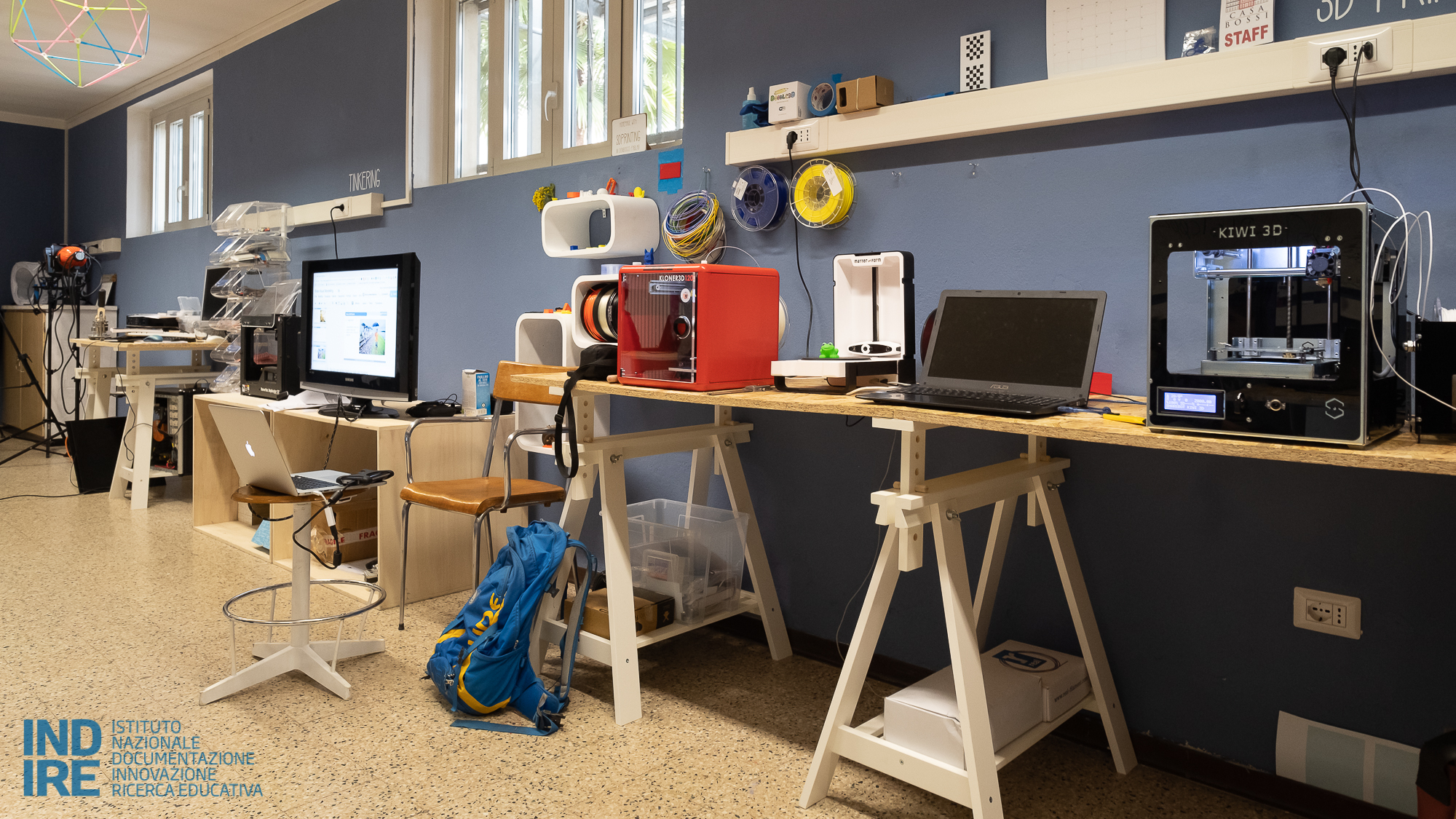
The book is the result of a long and complex field research in which researchers have studied the effect of introducing the 3D printer in teaching, especially for very young students, starting from the pre-primary school.

By applying a simple design cycle, called Think-Make-Improve, the book highlights, through theoretical and practical insights, how children can be brought closer to design, without them feeling unprepared or inadequate for a complex task. With this cycle the concept of error is contextualized as part of the process of improving the object and aimed at deepening, through reasoning on the process itself.

The book, as anticipated, contains a first theoretical part, where maker teaching is framed in a broader context that finds its meaning in Papert’s constructionism, a theory in which we tried to understand what students learn when they are immersed in learning environments with materials and tools to build objects, share them with peers and teachers. Here we see the role of design cycles in understanding the construction process and their work.

The second part, more practical part presents a series of tasks that teachers can acquire and perform in the classroom. These are tasks that involve 3D drawing (optimized for pre-primary and primary school) and 3D printing. The tasks are designed to acquire spatial skills, to reinforce lateralization and to solve real problems in a simple and funny way.

We can conclude that not only “you learn playing”, but also “you learn inventing” and above all “you learn making mistakes”.

Download here the book >>>

Lorenzo Guasti and Giovanni Nulli


IC Lucio Fontana in Rome (school architecture archive photo)

Guidelines published for rethinking and adapting learning environments at school

Today, it is no longer possible to think about school innovation without rethinking the learning environments. The “Guidelines for rethinking and adapting learning environments at school” have been drawn up with the contribution from the Ministries of Education forming part of the Interactive Classroom Working Group (ICWG) of the European Schoolnet (EUN).

The text has been prepared with the participation of politicians, consultants, headteachers and teachers from eight countries: Austria, the Czech Republic, Estonia, Ireland, Italy, Norway, Portugal and Switzerland. Indire actively contributed by submitting its research at ICWG meetings and specifically through the researchers Leonardo Tosi and Samuele Borri.

The document provides an interpretation of and a vision for schools that have developed the idea of “space” as a fundamental element of innovation together with new technologies for teaching.

A school can be built from scratch, or it can be adapted by changing the original concepts on the basis of which it was built. So, what kind of practical interventions can schools take to make modern education more effective, in line with our time? There is a part in the introduction that clarifies the spirit of the proposal: “There is no single solution: what works in one place may not work in another. The aim of this document […] is to inspire headteachers and teachers, to help them rethink their current teaching practices in the classroom and to show them how even quite small changes in existing classrooms and other school spaces can have a significant impact on teaching and learning”.

How these new guidelines develop remains to be seen. Section 2 of the document presents a research survey in which the pedagogical implications are addressed, starting with an analysis into the definition of a “learning space” and a review of the research results, from which comes confirmation of the indispensable role of space in favour of active learning for the school that wants to take itself into the future. In the third section, a summary explains how space can create benefits for both teachers and students. In section 4, the European Schoolnet’s Future Classroom Lab is discussed in the light of the so-called learning zones (i.e. zones to research, create, present, interact, develop). In this section, a significant part is devoted to future guidelines, including in terms of investments by the European Commission, relating to the experience of the Future Classroom Lab and the projects related to iTec. With the fifth section, we see what the indications are for configuring a Future Classroom Lab. In section 6, teachers are provided with some useful tools that can be used to develop the appropriate verification steps, with a reasoned approach that leads teachers to reflect carefully, before starting work to modify the school spaces in which they work. The document concludes with a national and European overview that describes, through some case studies, the state of the art of technological innovation, the interventions carried out and those soon to be implemented.

Guidelines for rethinking and adapting learning environments at school (PDF) >>>

Giuseppe Moscato

2013 School building technical standard guidelines

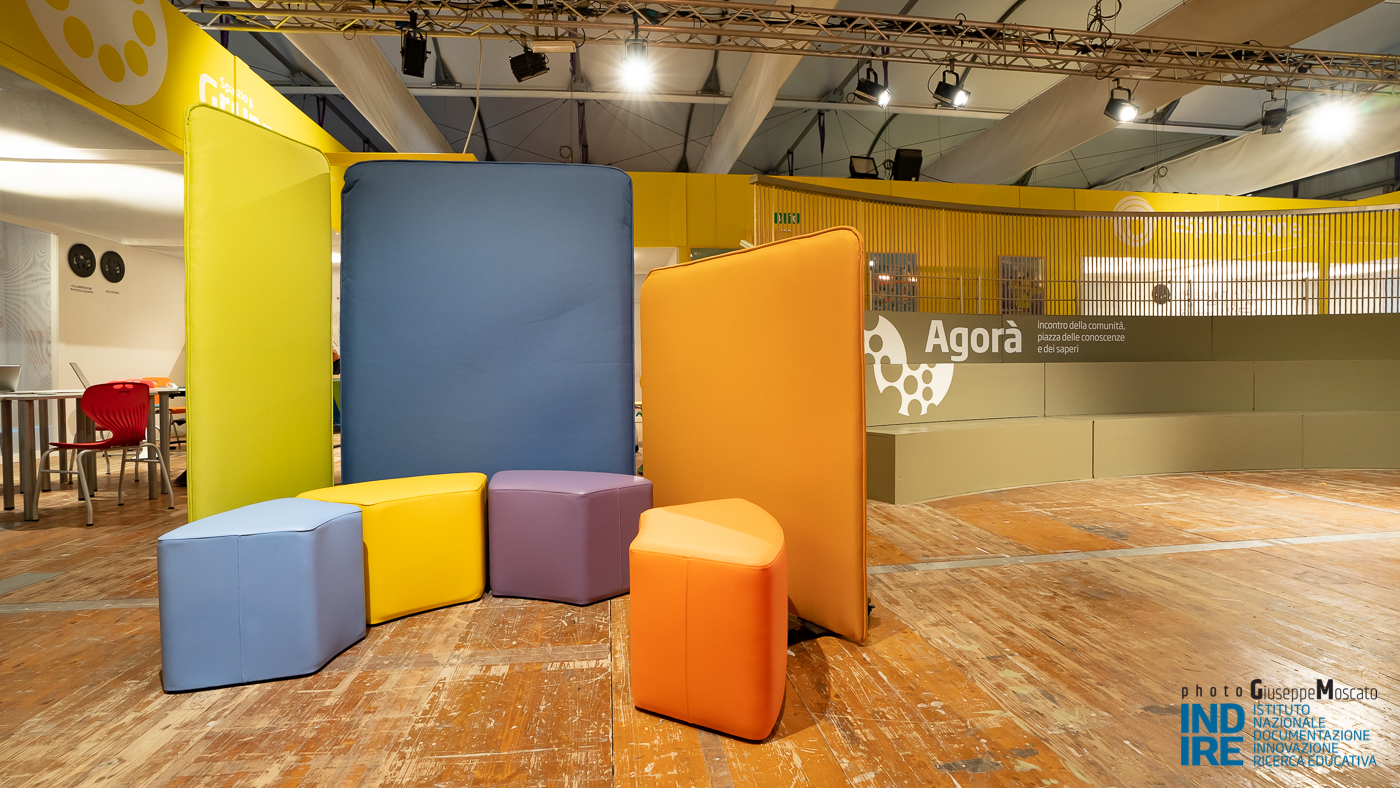
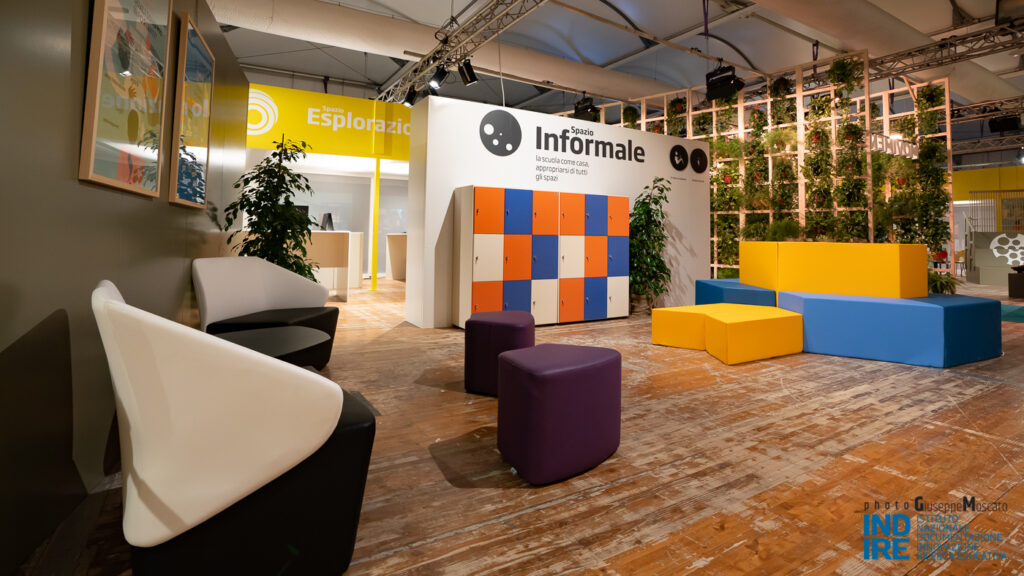
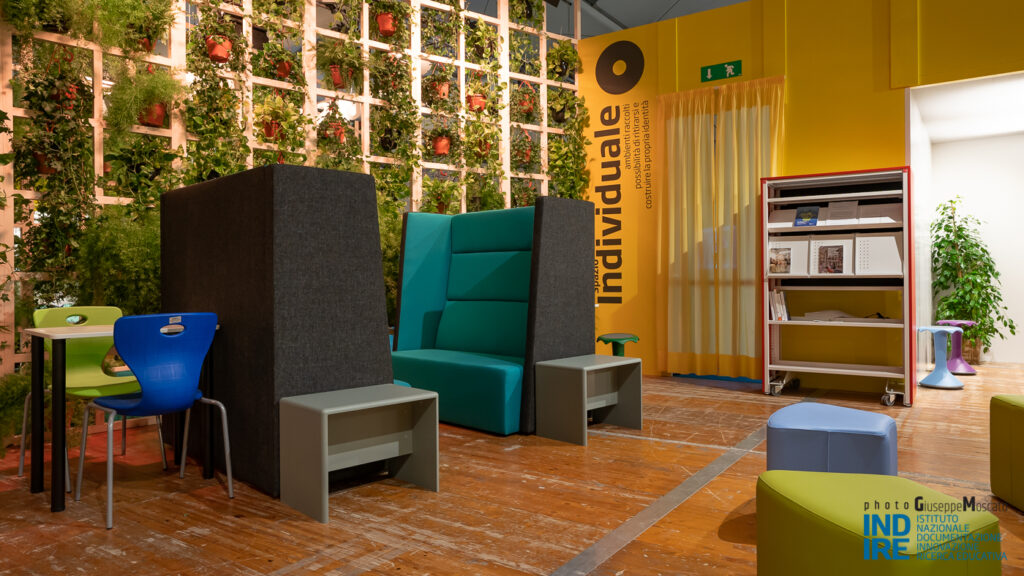
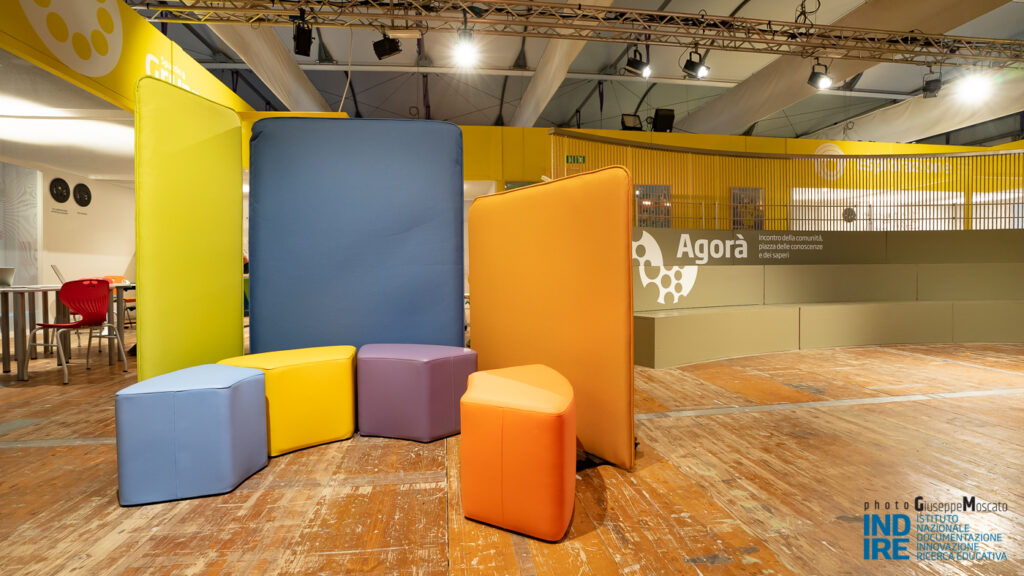
“The class is obsolete.” With these words in 2011 the architect, Prakash Nair, brings to mind the need to rethink the didactic space, pointing out, as a legacy from the industrial revolution, the class organised into rows of desks squeezed into a narrow space. In Italy, the first signs of a change in thinking about the function of school spaces was initiated through observational research conducted by “Indire” in 2012. Research then supported the design of the “New guidelines for school construction”, published by the Italian MIUR [Ministry of Education, Universities and Research] in 2013. And whilst waiting for the technical specifications, several schools nevertheless started to rethink the relationship between space and learning and began to explore new ways of using space despite the structural limitations caused by the impossibility of changing the school spaces in an incisive way. The guidelines describe five paradigmatic spaces identified as significant models of learning environments, based on a “performance” logic that makes them versatile with respect to learning objectives as long as movable, comfortable furnishings are used that can support differentiated teaching activities, often accompanied by the use of online, digital technologies. The Agora Space, the Class Space, the Laboratory Space, the Individual Space and the Informal Space, thus described in the “Building Guidelines”, constitute micro-environments and represent the alternative to the traditional conceptual model. The aim is to start a process of change at an intermediate level before building schools without classes or with spaces with so few characteristics that they can be modified at the simple request of users, students and teachers.
(Cannella, G. The informal space: from the guidelines for school construction to practical implementation. In «Turris Babel», 97, Alto Adige Architecture Foundation, Bolzano).


Download the MIUR Guidelines >>>

The Guidelines renew the criteria for designing the school space and equipment for the new millennium. This is why they have moved away from the prescriptive style of previous guidelines, dating back to 1975. The new logic is, in fact, one of “performance” and makes the design criteria more easily adaptable to the educational and organisational needs of a constantly changing school. The internal architecture is reorganised, provided for a different concept of space from a teaching organisation model that remains anchored to the centrality of the front-facing lesson. The new Guidelines propose modular spaces which can easily be configured and which can respond to ever-changing educational contexts, malleable and flexible environments, functional to the most advanced teaching and learning systems. In fact, if teaching methods change, breaking away from the front-facing approach, constructing new school buildings will also have to meet completely new architectural parameters and criteria and the organisation of the space.

Editorial staff

International rules and guidelines

We do not only want schools that meet the standards; we also want quality schools”, reads the end of Laura Galimberti’s foreword.

The metaphor of space as a ‘third teacher’, used by Loris Malaguzzi, connotes the important role that the environment can play in the school system. It is not only a functional role – to make certain activities possible – it also represents the way in which these activities can be done, the meaning that the functions to be carried out have for the subjects involved”.

The industrial society promoted a school building that has never been questioned in its functional and symbolic aspects. The organisation of space in this structure had the objective of creating hierarchical relationships based on ideologies of order, control, monitoring, discipline and competition (Markus, 1993). From a pedagogical and didactic point of view, the classroom setting within these spaces was functional to a ‘transmissive’ model in which the fact is emphasised that knowledge possessed by the teacher is transmitted and acquired by the learner. Therefore, the basic structure of the school, according to this model, provided classrooms for the group-class and other, dedicated classrooms, such as laboratories, are connected by corridors”.

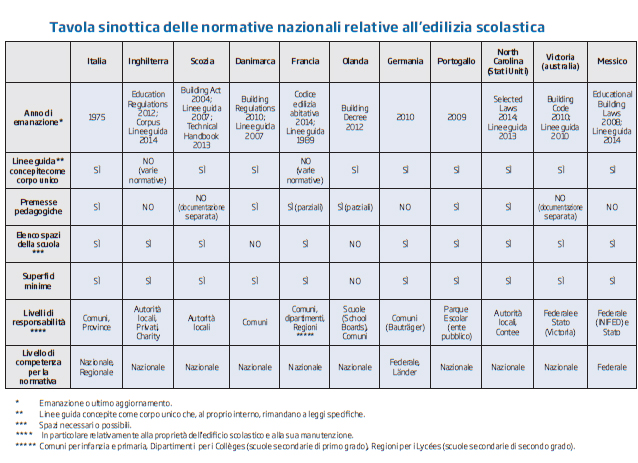
The Indire research group on educational spaces developed a study resulting from the analysis into the guidelines for constructing schools in some countries that have identified this sector as one of the main drivers to promote school innovation and the modernisation of learning environments. The results of this study, together with the study into the main guidelines developed in the field of educational research on spaces, represent the main content of the book, “Educational spaces and school architecture: international rules and guidelines”, edited by Samuele Borri. A case study focused on the Ørestad Gymnasium school in Copenhagen completes the supporting documentation.

The book is divided into four chapters:

  • the first chapter analyses the emerging trends from research into education and some development guidelines which have been proposed at national and international levels;
  • the second chapter deals with the international debate on the subject in question, analyses the work done by the OECD and provides some thoughts for outlining a new idea of “educational space”;
  • the third chapter gives an overview of recent events in some countries that put school spaces at the top of their national agenda of priorities. The analysis of often very different approaches in terms of national legislation and guidelines for constructing new school buildings allows some common trends and development guidelines to emerge that underscore an effort to overcome the industrial model of schooling;
  • the fourth chapter focuses on the case study of the aforementioned Ørestad Gymnasium, a fitting example of how it is possible to design and build a school that is ready to meet the challenges of the future by putting design and architecture at the service of a pioneering pedagogical-educational vision.
    Conception, design, construction and experimentation are phases that mark the moments through which a new idea for “school” takes shape.

Full book index

Foreword – Laura Galimberti
Introduction – Samuele Borri
1. Main international research guidelines on the relationship between didactics and educational spaces – Elena Mosa
2. Types of teaching spaces based on recent research into the field of education – Giuseppina Cannella
3. International guidelines for constructing school buildings: trends and guidelines
Introduction – Leonardo Tosi
3.1 England – Beatrice Miotti
3.2 Portugal – Lorenzo Calistri
3.3 Scotland – Beatrice Miotti
3.4 Victoria (Australia) – Leonardo Tosi
Conclusions – Leonardo Tosi
4. A case study: Ørestad Gymnasium, for a new conception of school spaces – Giuseppe Moscato

Read the book “Spazi educativi e architetture scolastiche: linee e indirizzi internazionali” (pdf) >>>

The editorial staff

The school architecture of the future in the new book published by Indire

2018 saw the release of the book published by Indire entitled, “The Classroom has Broken. Changing School Architecture in Europe and Across the World”, available in Italian and English and downloadable for free in PDF format.

Taking up the title of the well-known book by Francesco Antinucci published in 2001, “School is broken: because learning methods change”, this work proposes new models of school learning environments that are now spreading throughout many countries across the world. The building model, that has long dominated school architecture, based on the familiar pattern of the classroom and the corridor, seems to be no longer suitable for the technological tools, the teaching strategies and the objectives, in terms of skills, that characterise the most innovative learning environments.

This process of rethinking demands that the classroom model be surpassed as the only spatial reference of daily teaching and opens up a series of new innovative solutions and models with which to design the characteristics of a learning environment and to redefine the role and function of the classroom. In this context, the “1+4 Educational Spaces” manifesto, prepared by Indire in 2016, can be compared to a series of other solutions and models that are spreading today at an international level.

The book is edited by Samuele Borri and has a foreword by Alastair Blyth, a former OECD analyst who has long supported governments internationally in designing and assessing learning environments. It contains a collection of articles edited by national and international experts including María Acaso, Jim Ayre, Harry Daniels, Wesley Imms, Jannie Jeppesen, Elena Mosa, Kaisa Nuikkinen, José Pacheco, Otto Seydel, Hau Ming Tse and the Indire researchers Giuseppina Cannella and Leonardo Tosi.

The book is organised into three parts:

Part one: Designing spaces for learning
Introduction. The environment as a third educator
Design as a social practice
Pedagogy and space: the Australian case with an evidence-based approach
New social constructions of learning

Part two: New models and new solutions for school environments
Introduction. Designing new learning scenarios
1+4 educational spaces for schools in the third millennium in Italy
Classroom – Cluster – Open educational landscape. Three different development lines for school design in Germany
The European Schoolnet’s Future Classroom Lab (FCL)

Part three: Educational spaces and innovation processes
Introduction. A space for innovation
Connections between school buildings and learning
Architecture and interior design as key elements in changing the educational model
The development of schools: a way forward

The extract from the introduction by Indire’s President, Giovanni Biondi, allows us to frame the aims and perspective of Indire’s research work:

Over a century ago, Maria Montessori created spaces and furnishings on the basis of students and their needs and tore down barriers between classes. But the most functional school model, in terms of the objectives of the great educational systems of the West (which were to transmit knowledge and skills to an illiterate population, preparing it for entry into the new industrial society), remained centred on classrooms. On the other hand, if the lesson was the fundamental moment of school life, the environments had to be designed and furnished according to this centrality. Every other different need had to find space in the large corridors or in the “decomposition” of the classroom, in separate corners dedicated to the various activities. […] The disciplinary fragmentation of secondary school, the school timetable divided into ”subjects” and the consequent rotation of teachers in the same classroom, on the same chair did not challenge this architecture, nor the meagre furnishings of classrooms, until today. Generally in primary schools, teachers have always managed to tackle the problem of creating activities and environments and furnishing them in such a way that they are as suitable as they can be for students. It was the very age of the children that required reasons to be found for school activities, especially through involvement in constructive processes. It is no coincidence, therefore, that the most significant innovations both in architecture and in furnishings have been seen in buildings designed specifically for this age group: kindergarten and primary school. When, going forward during the course of studies, subjects become the centre of schooling, the classroom also becomes suitable for the activities that take place there. […] The historical-narrative method by which philosophy is explained as history, mathematics as science, and which then refers to reading the textbook at home, today, shows all its limitations in the difficult involvement of students. Developing collaborative skills, in shared study and research programmes, is not easy in classrooms with rows of desks, facing the board. By not thinking about enhancing logical skills or problem solving, only requiring that attention be paid to the lesson, is an effective solution. […] The lesson is an important element in the learning process but it can no longer be the only one. It can no longer be the axis around which a teacher’s employment contract is constructed and the teacher’s role is defined, the school hours in secondary schools are set, the architecture and even school furnishings are decided. In primary schools, and even more in kindergartens and preschools, where this centrality does not exist, where the environment is built in a functional way with regard to the activities, not only have chairs been set aside but the furnishings are different too, the door and the classroom walls continue to represent uncomfortable boundaries to be overcome. Walls and restrictions are not always easy to break down in buildings built tens, or even hundreds, of years ago and they, therefore, constitute an often insurmountable obstacle. A scenario that opens the topic of constructing new buildings which have been designed by looking at the innovation of the teaching organisation that will necessarily affect the school in the coming years. Architectural solutions must be guided by a vision of a school model change and not vice versa. […] The characteristics of the new school organisation are still to be identified, a school that we do not know yet and that will have to be built by relying on the design skills of architects and engineers but also researchers, administrators and school communities who can add their contribution for a school to be built based on needs and requirements partly related to the community and the region and partly related to the new teaching models that Italian schools are already independently carrying out in a bottom-up approach.

Read the book “The Classroom has Broken. Changing School Architecture in Europe and Across the World” (pdf) >>>

Laura Coscia

The design of a cl@ss 2.0 in Villadossola a research-action path

Teaching and the context

The intervention at the secondary school in Villadossola came about from teachers wanting to renew the environment, responding to the needs of learning 2.0 within the Cl@ss 2.0 Project, which enhances the implementation of several models of didactic innovation that can generate good practices for the use of technologies.

The link between teaching and context requires that the development of new learning methods proceeds hand in hand with the configuration of innovative spaces.

Among the many voices that support the need for renewal in the area of learning spaces, one of the most authoritative is that of H. Hertzberger, a master of contemporary European architecture and designer of exemplary school buildings, who strongly advocates abandoning the old and rigid schemes in favour of more varied, more changeable and, most of all, more open space forms.

Giving a spatial form to new ideas about education is a complex task, continues Hertzberger, and also requires some socio-cultural factors to be interpreted that determine the reality of today’s schools, such as the presence of children from different cultural backgrounds or the introduction of new technologies. All this must drive the creation of spaces that stimulate research, curiosity and discussion, where learning processes are no longer restricted to the classroom but require the entire building space (Learning is no longer restricted by the classroom walls but will claim the entire space of the building).

In this work of transformation, a fundamental role belongs to new technologies, not only because they offer tools that can be used in various activities, but because they have favoured the establishment of a new global communication climate, which has “profoundly modified certain aspects related to individual and group communicative relationships.”

This proposal to reconfigure a class 2.0 for the secondary school is, therefore, part of a broader experimentation in new contexts, in the shift from environments designed for teaching to environments designed for learning.

Space and learning methods

New learning methods require multiple configurations, which can be achieved thanks to the suitable management of fittings and furnishings. To give just a few examples, one-to-one learning is feasible with a table in an out-of-the-way position, small group activities can be solved with 4-seater tables, while for a collective discussion, a circular configuration is suitable. The complex, structured environments thus obtainable allow different individual learning times to be followed and allow different activities to be done at the same time.

Reinforcing this need is also H. Gardner’s theory on multiple intelligences (MIs) which, if applied to the definition of learning environments, has very significant repercussions.

In the study by Nair, Prakash, Lackney (2009) a table compares the MIs (Multiple Intelligences) with the types of spaces that can be created in school buildings, relating, for example, stands and meeting corners with the development of interpersonal intelligence, niches with intra-personal intelligence, internal squares with the kinaesthetic-body one; while the development of linguistic and logical-mathematical intelligence can make use of multiple communication configurations made possible by the flexibility and structure of spaces.

Hertzberger effectively explains that the learning space must contain a balance between the conditions of connection and the conditions of concentration (‘Finding a balance between conditions for concentrating and conditions for connectedness’): leaving alive the sense of belonging to a large community and offering niches and corners that allow individual or group activities to be carried out.

Following these considerations, we arrive at extremely significant developments: indeed, at this point, the difference between the classroom and the connecting space dissolves: the entire building becomes a learning space, divided into more or less large areas where differences in level, stairs, partition walls or balconies, form differently configured and separated areas in a more fluid or more decisive way: a learning landscape capable of absorbing differences and adapting to changes.

In rethinking learning spaces, as A. Biamonti recalls, the role of Environmental Systems assumes centrality, that is, the set made up of furnishings, systems and technologies, components for communication and information, that is a direct interface between users and the use of the spaces that is made. The Environmental Systems correspond to an activity of transforming internal spaces, done “by means of reconfigurable equipment capable of responding to new functional and communication needs.

Rather than an environment where ICTs have a place, it is an environment where ICTs have a central role, it is the optimal level at which to think about experimenting with their introduction. In full collaboration with new technologies, places dedicated to knowledge should become more permeable environments, relational activators open to the surrounding society, both really and virtually”.

Space and liveability

To design well-being, attention must be paid to the elements that make up the same intermediate level between architecture and those who use it, already mentioned with regard to functional and communication needs: natural light, artificial light, colour, acoustics, wall coverings, etc. Even if interventions are needed on architectural structures that have strong limitations, through these elements innovative and liveable spaces can be created.

The hospitable environment is able to support social aspects, because it allows the existence of the individual space and, at the same time, makes it liveable in multiple ways, even informal and spontaneous ways.

Nair, Prakash and Lackney (2009) among the 28 patterns that should guide the design of the 21st century school, also include the presence of individual spaces and containers (Home Base and Individual Storage), corners to eat and relax in an informal way (Casual Eating Areas), soft and welcoming seats (Furniture: Soft Seating). This means, for example, allowing a certain variety of movement and postures (at the table, sitting on the floor, standing, etc.) or creating an environment where living, working and concentrating can be done using the body in different ways, such as, for example, reading or working whilst sitting on a carpet or crouching on a step.

The welcoming environment also needs to be sympathetic to the relational and affective sphere, as stated by Lucien Kroll, a Belgian architect and author of important examples of school buildings: “Giving a personality to educational places does not mean making them functional, it means poeticising spaces, images, relationships”. Kroll’s vision, poetic and libertarian, rethinks educational environments by asking them to know how to communicate with people. Living in such a place is also the school and therefore an emotion that cannot be reduced to a set of functions, nor resolved as a scheme of quantifiable needs.

Another element to take into account is the ability of the space to reflect the identity of its inhabitants, to contain traces of the work of children. The personalisation imprints of the space reinforce the identity of the group and the sense of belonging. For this reason, panels and fittings that can be placed at the entrance or in the connecting spaces are also useful.

A class 2.0 in Villadossola

The considerations already mentioned represent some of the criteria that guided the first phase of the research-action programme: the design of new spaces carried out with teachers. In the second phase – within the newly created setting – new methods and educational programmes will be tested, whilst the third phase will represent the moment of verification.

The work followed two fundamental assessments: the needs related to the new learning methods and the needs related to making the environment accommodating and liveable.

The area with aggregable tables

The classroom to be remodelled was about 58 square metres and was designed for a class of 23 children, with an adjoining storage closet. It already had an Interactive Whiteboard on the wall next to the entrance. The space was divided into three areas, creating, in addition to the large area for work with aggregable tables, two smaller sections at the end of the classroom that made up the soft area and a work corner respectively.

The whole classroom had to be a flexible and open, independently manageable by the children. It was, therefore, necessary to ensure that the tables only performed the function of worktops that they could be aggregated in various ways, eliminating both the use of the desk as a fixed personal place, and the use of the desk drawer to store individual objects.

We thus created a double compartment backpack locker, where each student has two personal boxes: the first, large enough to hold their backpack, the other, smaller one for materials used daily. The double compartment, which frees up table tops for work, has thus become the personal space within the classroom, replacing the desk drawer/container that implies a spatially rigid arrangement.

The set of workstations also had to be able to support various layouts: we therefore opted for single tables, which are easier to handle and more suitable for creating aggregations with a variable number of workstations. In order to make moving the blue metal structure easier, 2 wheels with brakes were applied: in this way, the children themselves, at the beginning of each work session, can arrange the most suitable set-up.

The area allows for different layouts: a horseshoe (for teacher-led discussions), groups of 4 (for work in small groups), groups of 8 (for work in large groups), a circle (for collective discussions) and a “cinema” layout (for front-facing lessons).

The technological equipment also had to be in accordance with the principle of the greatest aggregation flexibility: in addition to the already existing Interactive Whiteboard, a decision was made to equip the classroom with laptops in order to offer each child the opportunity to work from any position. Special wheeled trolleys were purchased to store and recharge the laptops.

The soft area

In order to create a truly liveable environment and complete the range of combinational possibilities, we considered it essential to include a soft area in the classroom, consisting of sofas with natural wood and blue, washable padded cushions, to which a series of movable seats were added.

Loved by children, this area generally performs two types of functions: it allows informal moments of rest and detachment from the collective work, and offers an environment suitable for non table-based learning activities, such as group discussions, storytelling, dramatisation or performance learning.

In fact, the teachers came up with the idea of integrating the sofas with a set of seats made of foam parallelepipeds, soft and easily positionable, covered in washable material. In this way, the classroom area can be expanded to make it suitable for multiple activities, with free arrangements, for example, with a small or large circle.

The work corner

The work corner is at the end of the class – it offers a reserved point suitable for concentration, where individual or paired activities (one-to-one with the teacher, peer tutoring, etc.) can be done. It is placed away from other areas, marked by an accent light on the wall and separated from the rest of the classroom by high sided furniture. The semi-round plane allows good approachability to the wall and, being free of protrusions towards the outside, does not present obstacles in relation to the rest of the space.

Panel design and wall treatment

Both from the point of view of educational use and from the point of view of the environment’s liveability, the wall arrangement is also essential, being the place where school experiences are most expressed. Attention and a basic logic are needed to plan the whole setting, which otherwise risks taking on a life of its own, running amok and transmitting a sense of confusion that makes the things exposed lose their meaning.

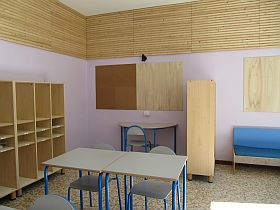
To allow for posters/signs to be arranged and to keep order and hold concentration, 3 exhibition areas were therefore created, each one formed by a double wood-cork panel, and spread over two walls of the classroom. The environment is made more welcoming by the new light purple colour scheme of the walls, to help concentration, and the natural wood of the panels. The acoustics have been improved by creating a continuous covering on the top of the walls made with thin, narrow slatted wooden panels. Sound-dampening textured surfaces help to reduce noise.

Outside this classroom, as well as the other ones, there was an additional panel that, covered by the children with drawings, cards and phrases, becomes a point of curiosity for the various classes and for discussion between the different activities.

Maria Grazia Mura


Bibliography and sitography

Hertzberger, Herman, Space and Learning, 010 Publishers, Rotterdam, 2008
Biondi, Giovanni, La scuola dopo le nuove tecnologie [The school after new technologies], Apogeo, Milan, 2007
Nair, Prakash, Fielding, Randall, Lackney, Jeffery, The Language of School Design, DesignShare.com, 2009, (2nd edit.)
Gardner, Howard, Formae Mentis, Feltrinelli, 2009, (18th edit.)
Biamonti, Alessandro, Learning environments, Angeli, Milan, 2007
Contributo: Le potenzialità della LIM e il principio di convergenza: intervista a Roberto Baldascino [Contribution: The potential of Interactive Whiteboards and the principle of convergence: interview with Roberto Baldascino]
European experiences: Future School
Example of some secondary schools in the Netherlands: www.ahh.nlwww.indire.it/aesse
Interview with Alessandro Biamonti: http://www.indire.it/content/index.php?action=read&id=1537
On participatory design: http://www.bdp.it/aesse/content/index.php?action=read_school&id_m=3463
Photo
Herman Hertzberger, Marco Scarpinato – AutonomeForme: Romanina elementary school, Rome (2005 – 2012)
taken from: http://www.domusweb.it/it/architettura/2012/09/21/la-scuola-come-metafora-del-mondo.html

The 1+4 manifesto for educational spaces

Why change learning spaces? Interventions of this nature are often complex and require resources and the ability to rethink methods and models which have been consolidated over time.

The transition from the school of the industrial society to the school of the knowledge society today requires diversified use scenarios, tools and methods.

The fluidity of the communication processes triggered by the ICTs clashes with physical environments which are no longer able to respond to constantly evolving educational contexts, and imposes a gradual rethinking of the spaces and places in order to provide flexible, multifunctional, modular and easily configurable solutions based on the activity to be carried out, as well as being able to satisfy different contexts. Spaces thus conceived favour the student’s active involvement and exploration, their cooperative ties and their “well-being at school”.

In addition to educational effects, Indire’s research in this area has focused on the learning environment in different but complementary ways: the aspect of well-being and the quality of life of students and the care for the aesthetic sense. Comfortable, colourful and welcoming places help make school pleasant and help make a sterile space one that can be lived in.

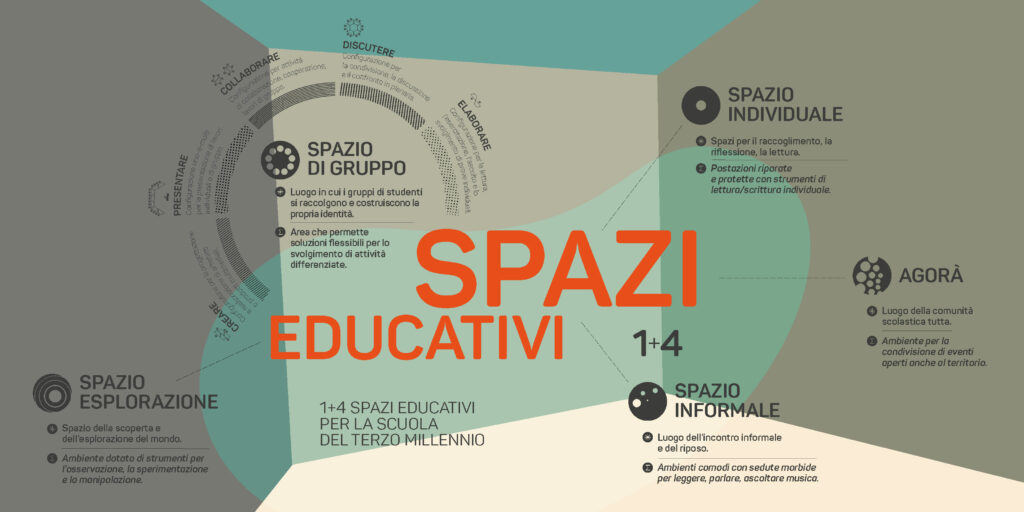
The analysis and in-depth study carried out in recent years by the institute has led to the proposal of the Indire 1+4 model for educational spaces in the new millennium.

“1” the group space, the group-class multifunctional learning environment, the evolution of the traditional classroom that opens onto the school and the world. An environment with flexible spaces which are in continuity with the other school environments.

“4” the school spaces which are complementary, and no longer subordinate, to the daily teaching environments. They are the Agora, the informal space, the individual area and the exploration area.

The model has become a manifesto for the new generation of educational spaces and was presented at the international conference “Environments for education. Educating Environments”, organised by the University of Kassel in Germany (http://www.uni-kassel.de/uni/). It is based on multiple levels of analysis (Brofenbrenner, 1989) and proposes a vision that differs from the idea of a school as the sum of its classrooms (Airoldi, 1978) and extends, beyond the didactic dimension, to the social context and the ability of an environment to affect the quality of social relationships (Leemans and von Ahlefeld, 2013, Lefebvre, 1991).

The research group’s work developed along differentiated and synergistic lines: the analysis of cases of excellence at the European level, the analysis of educational policies aimed at promoting innovative educational spaces, the study of technical regulations for building schools, the observation and enhancement of the ways of rethinking spaces promoted by cutting-edge schools at the national level, cooperation and reflection within research contexts and international organisations.

The research method included a literature survey and a comparative analysis of the most significant international legislation, observation visits with the application of qualitative and quantitative tools, semi-structured interviews and the development of case studies.

The editorial staff

“From the classroom to the learning environment”

Does it still make sense to have schools made up of closed classrooms, connected by corridors and classroom settings, with students sitting in rows of desks? Can a solution be found that takes into account what is known today about the tools, methods and means through which children can learn effectively? What does educational research suggest about the characteristics of environments where students should learn to become conscious citizens in tomorrow’s society?

The book, “From the classroom to the learning environment”, edited by the Indire President, Giovanni Biondi, the director of the Indire Technology Area, Samuele Borri, and Leonardo Tosi, the Institute’s head technologist, seeks to answer these questions.

Through the contributions of the Institute’s researchers, who have been studying this field for years, the work documents experiences of excellence both in Italy and abroad, good practices and examples of school environments that have been able to meet the challenges of modernity and propose effective solutions. Within the national framework, which, after such a long time, now offers some significant opportunities to develop “new schools”, a new way of designing environments is proposed: there is no longer a clear separation between those who must design a school (actively) and those who must inhabit it (passively), highlighting instead a participation around a shared idea.

The debate on the characteristics of school environments is not a matter reserved exclusively for technicians or designers, but is, today, a meeting place for different professionals who, in a continuous dialogue on the issues of innovation and the needs of the school community, are looking for a solution that can meet the new needs of school users as well as the demands of society.

Luigi Berlinguer, the former Italian Minister of Education and an attentive observer of innovation processes, highlights the central theme of the functionality of school buildings in the foreword: “If an investment in a school building ends up yielding 30% of its potential because it cannot accommodate a full school day in all its activities, this means that its capacity has not been well exploited. Today, to construct a new school building, just to accommodate activities relating to the transmission of knowledge, means condemning an investment to a partial and substantially negative outcome”.

The same national guidelines for the preschool and first level of schooling curriculum highlight the need for a learning environment that can accommodate and promote student-centred activities: “The social dimension of learning plays a significant role. In this sense, there are many forms of interaction and collaboration that can be introduced (from mutual help to cooperative learning, to peer learning), both within the class and through working groups with students of different classes and ages”.

So the goal is to create a school that can accommodate, and indeed promote, methodological and organisational innovation that many teachers, headteachers and schools are carrying out autonomously or in regional networks. But how do you move from a classroom and corridor model to an environment model in which students and teachers have integrated areas and zones, in which to perform various activities based on the type of content and the tools to be used?

Pioneering headteachers and forward-looking local administrations try to transform and adapt existing buildings into alternative spaces to the so-called “front-facing classroom”, reclaiming unused spaces, corridors, and classrooms which are only used for short periods during the school day. Various educational places are therefore created, with workshops, group spaces, areas for exploration, agora, corners for presentation on a large screen: a variety of integrated and complementary environments in which groups of children alternate to complete their projects, solve problems, discuss their potential solutions, recover ground by working closely with a more experienced partner on a given theme.

In these environments, the hybridisation of languages is one of the main themes, as the pedagogist, Loris Malaguzzi, highlighted. It is no coincidence that the book’s foreword is edited by Tullio Zini, an architect who has been able to interpret Malaguzzi’s “Reggio Children Approach” from the point of view of spaces and his way of putting children at the centre of an environment made up of workshops and multiple modes of expression. It is Zini himself who highlights the inadequacy of the current school paradigm which is unable to accommodate the drives and challenges that society and children are facing: “[…] the school is a living organism that, over time, is enriched and modified by following the pulse of life and its transformations, while the existing school building is made up of a large part of anonymous or ugly buildings, poorly maintained, and in many ways “non-places” that fail to emotionally involve a student, or motivate them”.

A school that looks to the future must be well aware of its past and its tradition in order to reinterpret these in a new perspective, adapted to the new challenges it faces. The book aims to discover the roots of school spaces in Italy in order to offer a new idea of an integrated learning environment in which discipline and exasperated control are replaced by participation and empowerment.

On the one hand, we have the mass undifferentiated school, which fulfilled its objective in an important phase of Italy’s history, as Giovanni Biondi points out in the introduction: “The great educational systems were designed as a ‘company’, with the gigantic objective of ensuring the literacy of an entire nation. In this context, the lesson, that is, the transmission of knowledge by a teacher and the study of the school book, represent the most economical and functional solution to achieve a goal with impressive numbers”. But, Biondi continues: “The first creaks in the system were felt way back in the 1920s, at elementary school, where the system and disciplinary fragmentation were less accentuated. At that time, it was a question of criticism that affected methodologies, but which almost immediately also ended up involving the spaces and the furnishings. What was questioned was the rigidity of the system that required an unnatural adaptation to the space and the time from the student. Freinet, Montessori, Lombardo Radice and the whole movement of activism highlighted, already in the 1920s, how the centrality of the textbook and the lesson were in contrast with the needs of children, as well as the spaces connected to this type of organisation. What was highlighted at the time was, above all, the fact that very young students were asked to adapt to an environment based on immobility and concentration, with benches, pews, chairs and furniture, which demanded unnatural and forced actions”.

The content of the book is developed from this basis, retracing the characteristics and functions of buildings and furnishings for the school from the Unification of Italy up to the current day, characterised by a strong drive for innovation but, at the same time, the presence of a building and bureaucratic heritage that impedes change initiatives. From buildings designed for the regimentation of pupils without distinction, we arrive at the contemporary school, where requests for customisation become absolute priorities. From furnishings designed to demand discipline and immobility from the student, we come to the modern concept of design and the idea of furniture designed for ergonomics and functionality.

The book, “From the classroom to the learning environment”, also contains a broad reference to the “1 + 4 Manifesto for educational spaces in the third millennium”: an Indire proposal to overcome the classroom and corridor model and bring together a project group or a school community in order to discover different solutions that can offer school users environments which are in line with a different way of staying in school and understanding teaching.

The work, finally, presents a rich repertoire of period images and photographs of contemporary environments which are functional to the needs of modern and active teaching and to an idea of a school environment that allows everyone to be accommodated in their different aspects and moments that characterise social life.

“From the classroom to the learning environment”
edited by Giovanni Biondi, Samuele Borri, Leonardo Tosi
Altralinea editions

More info & How to buy

Patrizia Centi

Learning environments and inclusion reflections on the Indire training course in collaboration with USR in Tuscany

The context of the talk

How much can the organisation of space foster inclusive processes? Indire’s research has developed the idea that attention should not be directed to the individual, fleeting student, but to all students in their individuality.

It is with this approach that Indire designed the training course for the teaching staff of the USR [Ufficio Scolastico Regionale – Regional School Department] in Tuscany, “New educational spaces in an inclusive perspective”, which ended on 18 January 2021.

Designing the school space means, first of all, thinking about the various teaching situations that can be chosen. In Leonardo Tosi’s work, “Fare didattica in spazi flessibili [Teaching in flexible spaces]”, he writes: “The concept of diversity in all its meanings requires a safe and enriching environment, which reflects each student’s individual differences in training needs and other educational situations”. In essence, the focus should be on the importance of space within the school’s innovation process, according to the proposal contained in the 1+4 Manifesto for educational spaces, where space is conceived as an essential pedagogical element. The classroom, understood as the place where the transmission of knowledge takes place, is, in itself, a condition in which the relational aspect, as another indispensable element for cognitive development, is often not favoured. Convinced that the Indire Manifesto is already an inclusive model, it has been proposed as a starting point to be related to the principles of the ICF (the World Health Organization’s International Classification of Functioning, Disability and Health) that provides a scientific basis for understanding and studying health as an interaction between the individual and the context. In fact, it is around the concept of the “context” that the training proposal could have had a significant role in discussion and debate directly with the teachers.

The training programme

The training course’s objective was to raise teacher awareness of innovative learning environments in an inclusive way, starting with the 1+4 Manifesto for educational spaces, with respect to which attendees developed design programmes (project work) in relation to their starting contexts. This approach benefited from a fruitful exchange between attendees and Indire tutor-researchers. After an initial introduction to the topic of innovative learning environments, activities were organised as moments of shared design and reflection on the individual programmes in relation to the symbolic, functional and inclusive value of the environments identified by attendees and included in their designs.

The training course, scheduled to start in early 2020, was inspired by a format for a blended programme: a first plenary session in which a general reflection on the research experience gained with the Manifesto would be proposed, followed by a moment of individual (and/or small group) study online by attendees. Subsequently, through workshops conducted in the presence of Indire tutor-researchers in the various provinces, attendees would design an innovative space with the idea of developing an inclusive model that breaks away from the traditional classroom and support classroom model. The course ends with experimentation at a school of an educational activity in the designed space. At the end of the course, the conclusions from the experiments considered most significant would finally be shared.

In light of the Covid-19 health emergency, the course has been entirely rethought to allow teachers to attend online. In the re-design, care was taken to keep the three elements that constitute the heart of the in-presence proposal at the core: the laboratory setting, the Manifesto, the ICF questionnaire. Specifically, the laboratory approach has been designed to gradually accompany attendees, through the various online appointments, in designing a didactic programme (project work) that can be carried out within the spaces of their school. The design had to take care to use learning environments as “third-party educators” to support inclusive teaching, capable of keeping the multiplicity of learning (Gentili, 2011), socio-cultural issues, and skills (Ianes, 2013) together.

The ICF questionnaire: a tool for building an inclusive environment

The questionnaire proposed to teachers to analyse the needs of the most fragile students in their class (or section) has been developed on the basis of the areas identified by the ICF classification system. This classification describes the state of health and functioning of the person through a biopsychosocial model, which includes multiple factors and in which the environment (physical, social, relational, services, etc.) has a key role in determining the individual’s level of participation (involvement in life situations) and the range of activities that he or she may or may not perform.

Applying the ICF to a training course was an innovative approach for two reasons. The first concerns the ICF approach, which looks at disability (including, in children and young people, the entire range of Special Educational Needs) as a condition that can affect anyone in the course of their life and that is linked not only to the physical or functional characteristics of the individual, but also to the complex relationship between physical conditions and the context (environmental and personal factors); it is, therefore, the relationship between these variables that can favour or limit the person’s state of health and his or her participation in social life. Environmental factors can, in fact, take on the form of “barriers” (in a broad sense and, therefore, not to be confused with the concept of “architectural barriers”) or “facilitators”.

The second reason is that the ICF is a tool that can easily be applied by several people and professionals at the same time, with the aim of obtaining an increasingly complete description of the necessary contexts.

It is no coincidence that the ICF, precisely because of its holistic view of the person and their needs, constitutes the basis for the development of the new PEI (Piano Educativo Individualizzato – Individualised Educational Plan) introduced in the first half of January 2021 in every Italian school.

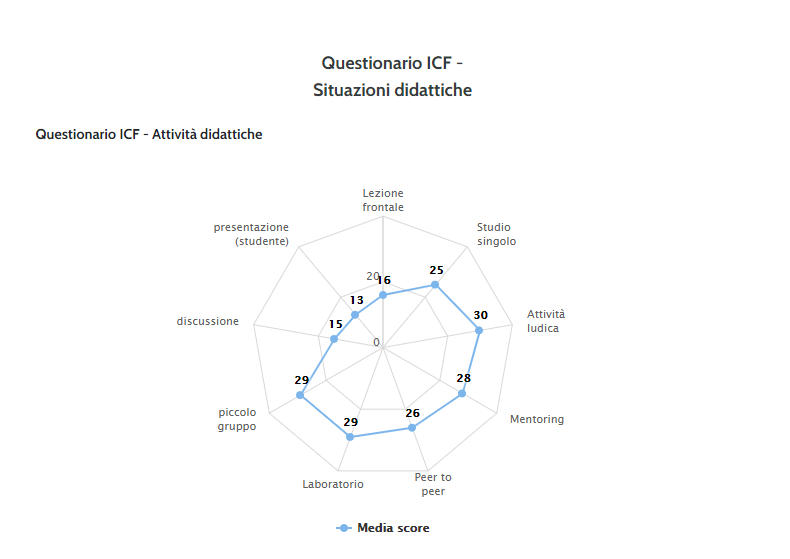
Starting with the description of the limitations in the area of activities and the participation of the individual student or class group, the questionnaire suggests didactic situations which are more compatible with the situation described according to the “didactic activity + spatial configuration” model based on the 1+4 Manifesto for educational spaces. The questionnaire, therefore, represented an opportunity to allow teachers to truly experience the ICF classification by applying it to their school context, with the aim of understanding the implications of space in determining or mitigating disability and how it can act as a facilitator.

The attendees’ designs

Following the opening webinars, teachers worked in subgroups, divided on a provincial basis, supported by in-depth materials prepared for the purpose. They were given the task of developing an initial design for reconfiguring school spaces in an inclusive perspective.

The designs were developed on the basis of a model that provided for spaces to be observed and student needs to be analysed, an analysis stimulated and guided by compiling the ICF questionnaire. On the basis of what emerged from these activities, attendees prepared, either individually or in groups, including with colleagues not directly involved in the training course, a presentation of a case based on detecting the needs of students, on teaching and learning methodologies identified in relation to them and on a first draft of reconfiguring the spaces and furnishings available in their schools.

Each presentation took a disciplinary or interdisciplinary design as its background.

Following the submission of these first papers, each group had the opportunity to discuss their work with Indire researchers during the online workshop.

In the final phase, groups worked on drafting a project work based on the cases previously presented. The project work was subsequently analysed with the help of a grid that made it possible to assess its degree of innovation and inclusiveness and to select a series of projects deemed most suitable for sharing and discussion in the wider group.

The presentation and analysis of the project work took place in January 2021, at the last plenary session; during this event, attendees also had the opportunity to express ideas, suggestions and opinions on the path taken.  

Analysing the attendees’ designs: reflections on the relationship between spaces and inclusion

The course was attended by teachers coming from every province in Tuscany: Lucca and Pisa, the provinces most represented, Prato, the one with the fewest teachers participating. The teachers who actively engaged in the course were mostly from the first level of education: specifically, 10.6% came from kindergartens, 42.6% from primary schools, 23.4% from lower secondary schools. Just over a quarter came from upper secondary schools (27%).

The topic of inclusion from a spatial perspective involved both support and curricular teachers. The distribution was varied: in some cases the course was followed just by the support teacher, but in reality this was the least frequent case (12.8%); the remaining cases involved different situations: for example, the curricular teacher and support teacher pair or even extended groups (such as the class council, in 44.7% of cases, or a large group of teachers from across the school, in 19.1% of cases).

Another interesting aspect to note is the recipient of the design of educational activities in inclusive spaces: most of the attendees (70%) thought of activities aimed at the entire class, 15% aimed at several classes within the same institute, and only a small percentage designed for the student with disabilities or with other Special Educational Needs (17% of cases).

The types of problems to which an answer was sought, also thanks to the intervention on spaces, are mainly relational and emotional (32%), but were also considered behavioural (27%), linguistic and communicative (21%) and specific learning disorder type problems (interventions designed for students with specific learning difficulties were 23% of the total).

The questionnaire tool was based on the ICF. In almost every case, it provided suggestions indicating the preferred teaching situations such as peer tutoring (95%), small group teaching (96%), mentoring, and learning through play (85%). These situations represent the greatest facilitator conditions in the case of inclusion.

In fact, the questionnaire has been used several times as a tool to help “diagnose” the initial problem situation, not only for a single student but also in terms of the entire class group or a heterogeneous group of students.

The spaces considered by teachers in their designs were numerous: ranging from the classroom, to shared and open spaces, to outdoor areas, as well reclaimed spaces that were underused or used for other uses (for example, the support room has often been rethought to accommodate relaxation areas for informal activities or for individual study).

The types of intervention were different too: they mostly involved rethinking furnishings (66%) and re-purposing existing environments (66%); to a lesser extent, however, but understandably given the impact in terms of costs, time and the professionals involved, they provided for more structural interventions (17%).  It should be remembered that, in this as in other data from the questionnaire, since the subjects could answer by selecting multiple options, the total of the answers could exceed 100%.

Considering that the course took place at a time when the Covid-19 pandemic greatly limited the use of spaces, this forward projection by the participating teachers, returned in their design work, seemed to us a good indicator of the sensitivity towards interventions that could be implemented as soon as the contagion containment measures allow the spaces and the methods for using them to be rethought.

The works that the teachers presented were very interesting: they showed that the teachers had grasped the salient points of an inclusive design of the curved space.

It would be very interesting to be able to follow the evolution of these design works that could really trigger all-round innovation processes in schools and that look to space and inclusion as two essential elements of a quality education.

Francesca CaprinoStefania Chipa, Alessandra Galletti, Giuseppe MoscatoLorenza Orlandini and Silvia Panzavolta


(school architecture photo archive)

Learning environments and new challenges between pedagogy and architecture at the Fiera Didacta Italia 2021

The fourth edition of the Fiera Didacta Italia 2021, the fair organised by Firenze Fiera with the collaboration of INDIRE, has just ended. The aims were to promote and encourage debate among the interested parties in the school and education sector on some of the most discussed issues in recent times.

The fair event was streamed live due to the health emergency and the anti-contagion restrictions in place as a result of the pandemic. From 16 to 19 March, more than 650 events were broadcast on the web, including seminars, conferences, webinars and immersive workshops, as well as 16,000 hours of training provided by teachers.

During the opening ceremony, which included a streamed speech by the Italian Minister of Education, Patrizio Bianchi, guests included Vincenzo Zara, representing the Italian Ministry of Universities and Research, Lorenzo Becattini, president of Firenze Fiera, the president of the Tuscany region, Eugenio Giani, and the mayor of the metropolitan city of Florence, Dario Nardella, who recalled how the crisis had, once again, highlighted the value of education and how we need to consider this as an extraordinary opportunity to innovate in the field of schools and training. The talk by the INDIRE president, Giovanni Biondi, could not be missed. He stressed that, due to the pandemic, the process of innovation in schools has accelerated, introducing new languages in an obligatory way: “We need to build the school of the future”, he said, “a school that does not exist yet. […] That is why it is important to think differently about how spaces, school time, technologies and methodologies are organised”.

One of the events organised by the INDIRE research group on school architecture in collaboration with Firenze Fiera and moderated by the Research Director of INDIRE, Samuele Borri, was broadcast on 17 March with the aim of expanding the theme on the relationship between architecture and pedagogy. During the event, entitled “Learning environments and new challenges between pedagogy and architecture”, some well-known international experts expressed their opinions and illustrated to the public the significant cases of new spaces being designed and new school architecture. The experts, who spoke during the live web event, repeatedly stressed the importance of creating functional school environments starting from the didactic planning of teachers and the educational vision.

The four invited speakers addressed the following topics:

Wesley Imms, University of Melbourne – Moving from Rhetoric to Facts: Some Findings from the International ILETC Project Relevant to Teacher Use of Innovative Spaces.

Paula Cardellino, Universidad ORT Uruguay – Rethinking School Design to Focus on Student Learning: Some Practical Examples.

Prakash Nair, AIA, Founding President & CEO of Education Design International (EDI) – Design for Learning in the Creative Age.

Alberto Ferlenga, IUAV Dean – Schools, architecture, cities. Schools, Architecture, Cities. Some Considerations From the Research Project PRIN (Project of National Interest) PROSA

Dr. Wesley Imms is an Associate Professor at the Melbourne Graduate School of Education, Director of the Learning Environments Applied Research Network (LEaRN) at the University of Melbourne and Director of LEaRN@MGSE. He teaches master’s and doctoral programmes on subjects that connect curricula and learning environments and conducts research projects working with individual schools up to entire educational systems. He is the author of approximately 80 academic articles, government and industry research reports and books on the use and evaluation of learning environments. He is currently the principal supervisor of 10 PhD theses on learning environments, involving students from five countries and four Australian states.

During the live lecture, the professor spoke about the ILETC (Innovative Learning Spaces and Teacher Change) project, which aims to find the necessary strategies to help teachers switch to the use of new innovative spaces as well as to collect data that measures the impact on how students who use these spaces learn. The project received a significant contribution from 17 industrial partners in 4 countries, making it multidisciplinary with global inputs and ramifications.

The project showed that there is a linear progression between spaces and teaching/learning: the more the space is adaptable, the more frequently better results are obtained in learning; in many of the circumstances analysed, it was found that teachers teach “well” and students learn “better” in the ILEs. The project did not try to prove that the space itself created those results, however, due to this solid correlation, it is logical to say that the ILEs played a role in facilitating the achievement of these positive results.

At the end of the talk, some interesting aspects related to the actions that schools have begun to take, after analysing the data collected by the ILETC project, were given, such as moving to an educational vision designed on the actual situation experienced by students working in those spaces, promoting new initiatives aimed at supporting teachers in didactic design and, finally, starting processes of rethinking the revised educational spaces based on the actual use that students make of them.

The talk then passed to Dr. Paula Cardellino, Senior Lecturer at the Universidad ORT Uruguay and an expert Architect in School Infrastructure. In the last 20 years, Paula has been actively involved in designing, researching and improving school structures and currently works closely with students, teachers, non-teaching staff and architects to integrate the educational vision into teaching curricula, within the learning environments.

During the conference, the Dr. showed a series of examples of school building design demonstrating how, through innovative, modern design solutions, it is possible to move from a so-called traditional space system, to a more innovative one where environments are more functional because they are more able to facilitate the realisation of educational projects for learning of a significant type. New spaces have been created thanks to teamwork with other professionals.

In fact, with a new architectural design, it was possible to transform old, conventional corridors into interconnected learning areas and the use of soundproofed furniture and partitions allowed islands to be created that favour recollection and concentration.

The expert repeatedly mentioned that the contribution from each member of the school community, who meets to gather ideas to create new environments and learning spaces, is fundamental and gives the team of experts elements to reflect on in order to translate those ideas into design solutions.

Here is a simple example of a process of collecting community ideas and how they can be transformed into possible design solutions.

Ideas and design solutions

“We should open up spaces and do more team teaching”
To go beyond the concept of class to move to working in learning spaces

“We should have more varied spaces (different sized spaces, shared spaces) to be used according to various needs”
Bright, open spaces with corners and crevices

“We should have more outdoor learning spaces”
To allow fluid connections between outdoor areas and indoor spaces

“We must design the heart of the space for the new preschool”
To develop a specially designed “central” space

Dr. Cardellino then concluded her talk by summarising the most important points, recalling that rethinking spaces cannot take place without taking into account didactics and that, therefore, these two things cannot, in any way whatsoever, be separated. A school is not a static space, it is, in fact, a structure that must be sensitive and responsive to pedagogical needs, capable of adapting and evolving over time according to needs. The learning environment to be designed must be sufficiently resilient and versatile in order to allow its use by all learners in the school. The space in which students learn should, therefore, be as flexible as possible, imaginative and dynamic, in line with a personalised student curriculum and all this is possible if the starting point is a collaborative evaluation based on research.

Another important conference guest was the architect, Prakash Nair, president and CEO of Education Design International (EDI); with more than 52 advisory positions carried out in countries on six continents, he is also the recipient of many international awards, including the A4LE MacConnell Award, the highest recognition worldwide for school design. Author of 3 important books in the field of education, he has worked for 10 years as Director of Operations for a multi-billion dollar school building programme for New York City, the largest school building programme in the world.

In his presentation, “Design for learning in the creative age”, Prakash Nair explained how often and willingly in schools there is still a predetermined didactic approach from a type of structural design more suitable for an industrial model of mass production, in practice it could be said that the “school’s hardware”, in some cases, strongly limits the “educational software” that has to be made. It is important to find architectural solutions that can modify outdated school buildings and to intervene on these buildings because they often reflect an outdated mode of education. Thus, by reshaping schools, opportunities are provided to physically manifest new and more powerful philosophies of learning.

Prakash Nair’s intention was to show the public the most significant case studies of school design, regarding both new buildings and renovations. The aim was to provide some ideas that could be used immediately to transform school environments into flexible functional spaces capable of adapting to the type of teaching provided by teachers.

There were several factors that influenced the conception of a new model of school architecture, such as the principles supporting the theory of self-determination (which argues that people are motivated to grow and change for innate psychological needs: competence, relationships and autonomy), or the discoveries of the fourth industrial revolution that led to major changes in society. The shift to meaningful learning in the educational field, centred on the student rather than the teacher, has led to a new type of environment modelled precisely on the student’s needs. The environment must be able to change its aspect, it must be able to accommodate, it must be safe and versatile, customisable, able to support multiple learning methods; it must also be able to send positive messages allowing identities to grow and ways of doing and acting to take shape.

It was then interesting to listen to the topic related to learning methods and how they can be practised within a functional space, well set up with a certain type of furniture designed for the purpose.

Towards the end of his speech, Prakash Nair illustrated several slides that showed how two innovative functional workshops for learning were created. Starting with a simple walkway area, it was possible to create a real iLAB at the Horace Greeley High School – Chappaqua – New York that could support multiple learning methods; or how it was possible to transform a traditional environment used as a computer laboratory into a more modern and functional one, best suited to accommodating different teaching methods, even for users of different ages (iLAB – Academy of the Holy Names – Tampa, Florida).

The last talk was from the architect, Alberto Ferlenga, dean at the Iuav University of Venice and professor of Architectural Design at the same University. Founder of the Villard Association, winner of the Leone di Pietra at the 1984 Venice Biennale and author of numerous publications, he has also been editor of some sector magazines. Curator of exhibitions at the Milan Triennale, for which he was Director of the Architecture and Territory sector, since 2017, he has been the national coordinator of the PRIN Scuole da abitare [Schools to be lived].

During the presentation, the architect explained how, over the years, Italian schools have increasingly lost their role as helping to “shape” the individual’s identity and, consequently, the architectural importance that these school buildings had acquired, especially during the years of national unification, has also been increasingly lost. 

In particular in the post-war period, if certain important examples are excluded, school construction in Italy has gradually lost quality, both in terms of architectural and urban aspects, to become one of the many institutional components.

Today, most of the school buildings in the country are “worn” and ”tired”, but immersed in an urban context experiencing continuous development and change. In view of the development of cities, with the consequent increase in new needs, we need to rethink how old school buildings could be reused, but also how to build new ones. This rethinking, if done, is often a bearer of quality for urban areas and ensures that the school building assumes a central role, not disconnected from the setting in which it finds itself, making it, in some respects, also indispensable to the life of citizens.

On topics such as: “schools and the identity of places”, “schools and cities”, “schools and internal spaces”, “schools and reuse”, the PROSE project of national interest (PRIN) is working, based at the Iuav University of Venice and conducted by a series of Italian universities, in collaboration with INDIRE.

During his talk, the professor described the stages of this research, introducing some thoughts on the desirable characteristics of the future design of the school building: a new urban role, a new architectural quality, a new sustainability. The renovated school building is capable of assuming new functions and new forms of use for the changing community, as Clarence Perry anticipated at the beginning of the last century (La scuola al centro del quartiere [School at the heart of the neighbourhood], 1914): “The second and more specific sense of the ‘social centre’ role is assumed by those schools in which, after daily lessons, employees or volunteers take over to carry out various activities, be they institutional or leisure. This is what has already been described in broader terms in the school organisation that performs new functions. The role of a ‘social centre’ is placed in that framework and in both cases the school is closely related to the neighbourhood”.

The event ended with discussions with the speakers, taking questions from attendees.

Matteo Nardella


Photo Fiera Didacta Italia 2019  (school architecture photo archive)

Guidelines published for Headteachers and Teachers on School Makerspaces

Since 2015, Lorenzo Guasti and Giovanni Nulli have studied what happens when a school decides to set up, internally, a Makerspace or a FabLab. 

The research started by looking at schools across the entire country: the researchers visited the schools that, at that time, had an active laboratory that corresponded to the characteristics of the Makerspace or Fablab. 

During the first round of visits, the level and circumstances of the schools involved were documented. The work continued by studying the material collected in order to identify common denominators and replicable management models with the ultimate aim of drafting a Manifesto of School Makerspaces and national Guidelines. 

Thanks to the partnership between INDIRE and EUN, the work was scaled up from a national level to the European level, involving every country in the European School Network. 

In fact, the Guidelines presented today are the result of the work carried out at the European level. In this case too, the research was based on visits to schools active in this field, with interviews, qualitative and quantitative questionnaires and data analysis and an extrapolation of common values to be required from those who want to start preparing a laboratory of this kind. 

The European guidelines, translated into Italian, are a useful document for the teacher or headteacher who wants to take the path that will lead to a Makerspace or a FabLab being set up in their school, as they take account of basic situations and needs, and therefore the needs found in every school. 

The first part of the guidelines provides a detailed definition of the laboratory and the benefits that the school can derive from it in terms of teaching methodology innovation, especially in the laboratory activities. This section defines the makerspace, outlining the scope within which it can exist. It tries to hypothesise which activities can be carried out within it and reflects on the pedagogical implications of this choice. 

The second part explains how to start the process of creating/selecting the space, how to find the funds, how to set the laboratory up and (most importantly) presents the project’s sustainability models because, while it is true that it is relatively easy to create the space, what is equally true is how difficult it is to prevent this space from quickly falling into disuse, abandoned by teachers, aging without maintenance and update. 

Download the guidelines here >>>

Lorenzo Guasti and Giovanni Nulli


Don Bosco – Borgomanero (NO) Upper Secondary School photo (school architecture photo archive)

National survey on school architecture and outdoor learning environments

The classroom has, for a long time, been the principal place for education; other spaces were considered instrumental or accessory. Each place in a school was designed for a specific use and remained unused at other times: for example, corridors were used purely to move within the school; the gym or laboratories were only used at set times and not for daily teaching.

Environments outside the school also fell into the category of spaces considered instrumental or complementary, designed as places in which to carry out certain activities, strictly related to their intended use, such as play and recreational activities or activities connected to motor activities. Flower beds and garden areas were often installed purely to add an aesthetic quality to buildings.

In order to investigate the use that Italian schools are making of outside areas to develop curricular educational activities and how these spaces are equipped with furniture and green areas to support teacher projects, the INDIRE research line – School architecture in collaboration with the Research Line on Small Schools launched a national survey to identify significant examples of schools that use outdoor learning environments for teaching, based on the INDIRE 1 + 4 Manifesto.

To define the outdoor learning environment, the research took as a reference the ‘target’ prepared by Higgins and Nicol (2002) with regard to the first two bands that identify the outside spaces within the school’s perimeter (playground) and those in the immediate vicinity (local neighbourhood), in places deemed as having natural characteristics (gardens, parks, reserves, rivers, etc.) or urban characteristics (rest areas, courtyards, squares, meeting points, etc.).

Two questionnaires will be issued:

  • one addressed to all the Reference Institutes of the first and second level schools;
  • one aimed at a stratified sample of Small schools across the country.

Both questionnaires will allow research into:

  • mapping the types of outdoor spaces on the basis of the 1 + 4 Manifesto (functional spaces) and a taxonomy on teaching environments (Seydel, 2018);
  • identifying the types of equipment (furniture and plants) also with reference to environmental sustainability;
  • describing how the outdoor space provided supports teaching. 

The survey will make it possible to obtain important information about how schools use their outdoor spaces, in what way and with what frequency teachers carry out teaching activities in them, how outdoor teaching is included in the school’s vision and what alliances have been created in support of an educational programme that relies on the use of outdoor spaces. The data should also provide a picture of how the spaces are set up and whether the furnishings and plants are functional to support the teaching activities. Finally, the questionnaire will also allow users to describe the reasons for not making use of outdoor spaces.

This is a large-scale participatory project in which all schools will contribute to the creation of a database of public interest.

The ultimate goal, in line with the INDIRE mission, is to guide research initiatives but also those of the regional and national school governance bodies, starting with what the schools actually propose or need. 

The outcome of the research, which will end with a publication, will aim to transfer the knowledge acquired to organisational bodies and entities through the involvement of schools and local authorities.

Stefania Chipa and Matteo Nardella


Montagnola Gramsci Istituto Comprensivo [Unified School], Florence (school architecture photo archive)

Inclusive Spaces: a school designed so that no one is left behind

The “Turmatt” primary school is in Stans, a municipality of just over 8,000 inhabitants in the Nidvaldo Canton. It accommodates about 300 children, aged 4 to 12.

The building is new, on two floors with 4 areas per floor. Each area is marked by a colour: yellow identifies the spaces dedicated to children aged 4 and 5; red is for the 1st and 2nd primary school classes for ages 6 and 7; blue for ages 8/9; and green for ages 10/11.

The groups of children on the same floor work together: there are class spaces, but also shared work environments.

At the base of architectural design is a precise idea of a school that is linked to the value of being together, teachers and children, even of different ages. In this way, full inclusion can be achieved and the entire school community can grow socially. 

Giuseppe Moscato


(school architecture photo archive)

From Indire research, a book to reorganise learning environments

The result of the Indire research group on school architecture, the book, “Teaching in flexible spaces. Designing, organising and using learning environments at school” (Giunti, 2019) has some interesting ideas on the relationship between pedagogy and architecture and proposes solutions and concrete examples to reorganise school environments without having to resort to structural interventions and relying purely on the resources available. The intent is to support design processes or the reorganisation of learning environments and to support an idea of school well-being that recalls modern standards of comfort and habitability.

“With the Indire group of researchers, we asked ourselves a series of questions on the theme of physical learning spaces and on the characteristics they ought to have in order to respond to the needs of a society which, today, has radically changed; a society in which the students too, are very different from those who sat at the benches only a few years ago”, says the book’s editor, Leonardo Tosi. “Having looked at those years, certain tools and proposals have been suggested that invite us to rethink the school environment and that indicate a path towards ‘well-being’ at school, with a vision that exceeds the traditional model of desks, classrooms and corridors and that defines new models that involve the entire school community and the surrounding area”.

The opportunity to develop an innovative type of teaching is linked to the definition of new environments which are more focused on the student. In fact, there are now many documents that stress how the environment affects the quality of learning processes, from guidelines for school construction to indications for the curriculum, up to the documents on cultural guidance issued by bodies at national and international levels. What is never explicit, however, is how physical space can concretely contribute to the quality of school life and learning, what the margins for intervention should be, and what tools can be used to help create an effective place for both teachers and students.

To respond to the need, increasingly felt by students, families and teachers, to be able to count on a space that accompanies and strengthens education, the book offers a useful set of tools to help transform the classroom into an expanded and flexible learning environment. An accommodating environment in which it becomes possible to design educational programmes that “come out” of the classroom and that exploit the potential offered by all the other places within the school, including unused spaces and apparently “useless” spaces. Here, among the many ideas, are some useful indications for creating a MakerSpace in schools where students can, in a collaborative work space, develop skills related to “building”, observing phenomena, analysing and describing the results of their experiments and improving problem-solving skills.

As the researcher, Samuele Borri, explains, the starting point of the reflection is the 1+4 Manifesto for educational spaces for the school in the Third Millennium, presented by Indire in 2016. The document lays out a vision that deviates from the idea of a school as a “sum of classrooms” and extends, beyond the didactic dimension, to the social context and the ability of an environment to affect the quality of social relationships. For Borri, “Going beyond the idea of the classroom as a unique spatial reference for teaching, we want to embrace a vision by which every place inside or outside the school should be considered a place to learn”.

But the study outlook, proposed in the book, is quite different, the one that starts directly from the school, through ten Learning Stories told by as many teachers who wanted to consider the physical environment as a strategic element in the quality of school life and learning. These are examples that have the function both of touching the experience of those who have already begun to transform their school spaces and of triggering a reflection on possible ways to reorganise and adapt existing spaces.

Through the contribution by the university professor, Beate Weyland, who, for years, has been proposing a new way of relating to the idea of designing Learning Environments, the book thus seeks to promote a new idea of educational space: “Schools, today, have been enriched with new functions. They are not only places dedicated to training, but are environments that stimulate the construction of ‘bridges’ between different generations and cultures; they are spaces and opportunities for dialogue between the public administration and citizens; they are learning environments, but also service centres for the area; places intended for children, but also reference points for that archipelago of associations that operate and gravitate in urban settings. In this new cultural humus, even the school building changes and needs accurate pedagogical information, to embrace the full potential of a society in the making.”

Using the words taken from the foreword by the teacher, Franco Lorenzoni, “The question we need to ask ourselves forcefully is why we teachers are still largely almost illiterate when it comes to the ability to organise the spaces for education in different and flexible ways. Classrooms and the arrangement of desks and chairs continue to evoke, in most of our institutes, the school of the nineteenth century. Moreover, in many education faculties, chairs are screwed to the ground and there are few or no spaces suitable for working in groups or for making a circle to start a discussion. And it is perhaps in this early discouragement of the body of us teachers, even before the bodies of students of all ages, that one of the roots of our poor ability to imagine, live and organise different spaces lies”.

This is how the book is organised:

PART 1 – DESIGNING AND ORGANISING EDUCATIONAL SPACES

Chapter 1: Designing new school spaces

Introduction: what identity does the school of the future have?
Designing a new school together
A pupil-friendly school: the case of the Alemannenschule
A school on the move: the case of the Labyrinth School
Rethinking the environments for teaching: the case of the San Filippo Educational Club [Circolo Didattico San Filippo]

Chapter 2: Designing and organising a MakerSpace environment at school

Introduction: from exploration space to MakerSpace
Designing and setting up a MakerSpace at school
Creating a MakerSpace at school: the cases of the Largo Castelseprio Istituto Comprensivo [Unified School] and the Second Montessori-Bilott Istituto Comprensivo [Unified School]

PART 2 – TEACHING IN FLEXIBLE SPACES

Chapter 3: Organising spaces and furnishings for a flexible environment

Introduction: the learning environment in national guidelines
Principles for preparing student-centred environments
Educational spaces and educational environments
New words for new spaces
Reading the physical environment
Mapping situations and educational settings
Teaching tools and furnishings
Evaluating Learning Environments

Chapter 4: Designing teaching activities for flexible spaces

Introduction: the toolbox
Learning Activity: the ingredients for designing active teaching
Learning Story: scripts for teaching in flexible spaces

More Info & How to Buy

Laura Coscia